

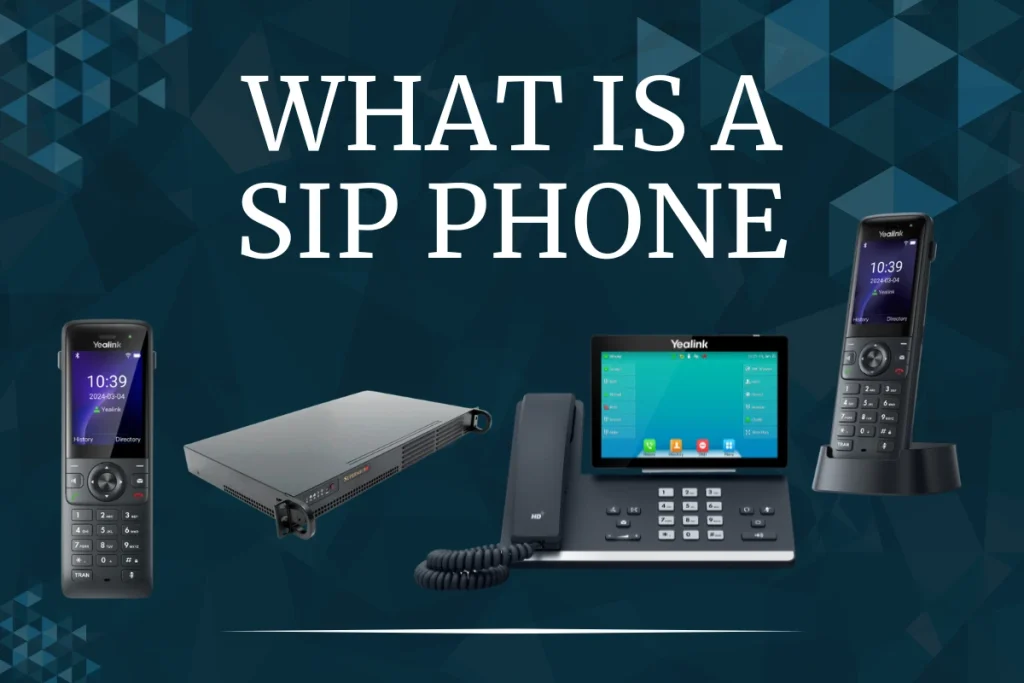
The common question when seeking modern means of communication is: what is a SIP phone, and why are so many companies adopting this technology? In simple terms, a SIP phone is an internet-based telephone that connects seamlessly over the web rather than traditional copper wires. Whether used in an office, hybrid workspace, or remote setup, SIP phones make voice and video communication more flexible, scalable, and cost-effective.
Before diving deeper into the technical details of what a SIP phone is, explore a trusted online store for business phones offering top-rated, purpose-built devices designed to help USA-based businesses stay connected anytime, anywhere — without missing what matters most.
Simple Explanation of SIP and SIP Phones
Basic definitions are a good starting point. The SIP abbreviation stands for Session Initiation Protocol and represents an established standard in communication, through which devices can establish, manage, and terminate voice or video sessions over the internet. A SIP IP phone is designed to handle everything from voice calls to video conferencing, text messaging, and even intercom functions, all through one secure platform.
In other words, instead of depending on traditional phone lines, a SIP telephone operates on your internet connection to transmit data packets. This makes it faster, cheaper, and more adaptable for growing organizations.
Therefore, if you ever need to define what a SIP phone is, think of it like a smart telephone that uses SIP technology to communicate through IP networks. How does a SIP phone work? To understand what SIP means in practical terms, imagine two people who want to talk to each other. Normally, SIP acts as the “digital handshake” to introduce devices, enabling them to connect seamlessly.
Here’s the simple process of the SIP phone process:
- The SIP phone sends a request to start a call.
- The SIP server (also called a SIP proxy) locates the other person’s phone.
- Once both devices agree, the session begins, whether voice, video, or text.
- When the conversation ends, SIP closes the connection cleanly.
This whole process happens in milliseconds, making SIP phone systems very fast and well-organized. Plus, since SIP is an open standard, it easily goes with both hardware and software from multiple brands, meaning you can easily pair a Yealink SIP phone with a Grandstream PBX system without compatibility issues.
SIP Phone vs IP Phone: What’s the Difference?
So many times, people confuse SIP phones with general IP phones, but they are not entirely the same. An IP phone is any device that passes on voice over an IP network (VoIP). A SIP phone is a certain type of IP phone that uses the SIP protocol for communication.
| Feature | SIP Phone | IP Phone |
| Protocol Used | SIP (Session Initiation Protocol) | Any VoIP Protocol (H.323, MGCP, etc.) |
| Flexibility | Supports voice, video, and messaging | Mostly voice-only |
| Interoperability | Works with multiple brands | Often limited to vendor systems |
| Example | Yealink SIP-T54W | Cisco IP Phone (non-SIP) |
Because SIP supports multiple communication modes, it’s the backbone of a modern unified communications platform. Businesses nowadays prefer SIP IP phones since they combine seamlessly with video meetings, softphones, and cloud-based PBX systems. These phones are designed for flexibility, multi-brand interoperability, and long-term scalability — making them the preferred choice for modern offices, call centers, and hybrid teams across the USA.
Before comparison of top models, check out Spoglink’s VoIP Phones Category, featuring enterprise-level SIP phones trusted by offices, call centers, and hybrid teams across the entire USA.
Why Businesses Are Switching to SIP Phone Systems
A SIP phone system has some advantages:
1. Cost Efficiency:
SIP calls utilize the internet instead of traditional phone lines, which greatly cuts long-distance and maintenance costs.
2. Adaptability:
Adding new users or extensions takes minutes; no need for complex wiring or installations.
3. Flexibility for Remote Work:
Team members can connect from anywhere using SIP phones or desktop devices.
4. Better Call Quality:
High-bandwidth SIP protocol guarantees HD-quality audio and dependable connectivity even for global teams.
5. Combination with Other Tools:
SIP easily syncs with CRM systems, video platforms, and UCaaS apps like Microsoft Teams.
Real-World Insight:
Many small businesses in Texas and California that chose Yealink SIP phones with hosted PBX platforms reported a 30% reduction in monthly communication costs while improving internal collaboration.
If you’re planning to modernize your office communication, now’s the right time to explore SIP-based solutions from Spoglink’s trusted U.S. inventory — all tested for compatibility with popular VoIP providers.
SIP Servers: The Backbone of SIP Communication
Every SIP phone system depends on a SIP server, which acts as the middleman connecting all endpoints. It verifies identities, routes calls, and guarantees data packets reach the correct destination securely.
You can choose between two main types of SIP servers:
- On-Premise SIP Server (IP PBX):
Hosted within your office network. Offers full control but needs IT management.
- Cloud-Hosted SIP Server:
Managed externally by service providers, ideal for small and mid-size businesses.
According to FCC.gov, cloud-based communication systems are projected to dominate 85% of USA small business telephony by 2026. This alone highlights how vital SIP servers have become in scaling current communications.
SIP Phones and Microsoft Teams: 2025 Update
Older models of SIP phones couldn’t directly integrate with Microsoft Teams, but that has changed in these newer models. As of 2025, Microsoft aids core SIP calling features through certified devices and session border controllers (SBCs).
That means in case you are using a Yealink or Grandstream SIP IP phone, you can connect it with Teams through a compatible gateway, letting employees use one unified interface for calls, videos, and messages.
👉 For detailed guidance, visit Microsoft’s official SIP calling support page or check our Spoglink blog on VoIP Phones for Small Businesses for setup advice.
SIP Softphones and Mobility
Note that not every SIP telephone is a desk device. A SIP softphone is a software-based version you can install on a laptop, tablet, or smartphone. It gives you the same features, such as dialing, caller ID, voicemail, and conferencing, through a simple app interface.
For business with hybrid or mobile teams, SIP softphones offer top-class flexibility. Employees can stay reachable on their work numbers even while travelling or working from home, without extra hardware.
Transitioning to SIP softphones also allows organizations to reduce equipment costs and maintain greener, paper-free operations, an increasing priority for sustainable workspaces in 2025.
Expert View: Why SIP Is the Future of Communication
As technology evolves, what is a SIP phone, is not just a technical question; rather, it is a strategic decision. SIP connects voice, video, and data under one single umbrella, making the whole collaboration stress-free and more secure.
According to industry analysts at TechTarget, more than 70% of enterprises are expected to standardize on SIP-based systems by 2026 due to lower latency, compatibility, and multi-device support.
The research team here at Spoglink tests SIP devices from Yealink, Grandstream, and Snom in a real-world business setting continuously to ensure that every recommendation offers performance, dependability, and value for US companies.
Before upgrading your current setup, consider inspecting your current network bandwidth and the provider of your SIP trunk to ensure the best voice clarity and call stability.
Transitioning Toward a Smarter SIP System
In case your business still relies on an outdated PBX or analog system, transformation to a SIP phone system doesn’t have to be complex. Start off small and merge one department with a SIP phone; then scale up as adoption grows.
The long-term benefits are smooth communications, lower monthly bills, and integration with next-generation cloud tools.
As your next step, take a closer look at Spoglink’s assembled collection of SIP IP phones and accessories, featuring business-ready models like the Yealink T54W or in case you are using Grandstream GRP2616, designed for crystal-clear calling and stress-free compatibility with all major SIP servers.
Conclusion
In short, what is a SIP phone, can be answered in one single line: that is, it’s the technology that powers current, internet-based communication. From small startups to enterprise networks, SIP phones offer flexibility, affordability, and innovation, reshaping how we connect and collaborate. If you are ready to make the shift, Reach out to our experts for more information related to SIP-compatible phones at Spoglink — your trusted USA source for next-generation VoIP and collaboration tools made for business growth.


